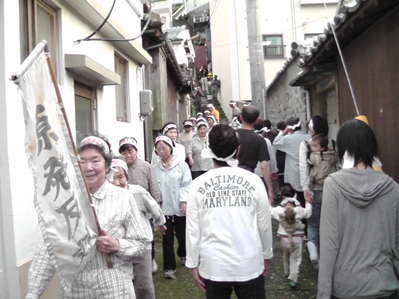
Anti-nuclear demonstrations in front of the prime minister’s official residence on Fridays have been growing rapidly in size week by week.
The organizers, Metropolitan Coalition Against Nukes, is a coalition of multiple anti-nuclear groups and individuals, particularly inspired to try and prevent the restart of the nuclear power plants all of which had been offline since May 5, 2012.
Lately, there has been a move from some of the organizers to “remove” a prominent activist, Kouta Kinoshita, or rather, remove his claim of health effects from radiation exposure from the anti-nuclear movement. An investigative journalist who did an onsite coverage of the 1999 Tokaimura nuclear accident, Kinoshita was keenly aware of dangers of radiation when the Fukushima accident happened. He has spearheaded an effort to bring truth to the public about radiation and radiation exposure, calling for evacuation of children, pregnant women, and women of childbearing potential from Tokyo and Kanto regions. (Evacuation from Fukushima and other severely contaminated areas goes without saying.)
**********************************************************************************************
Kinoshita’s biography:
http://www.kinositakouta.com/bio-engish
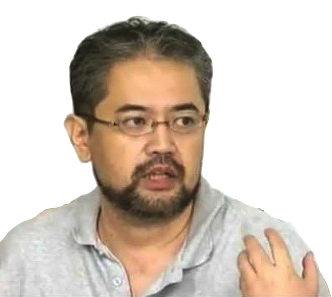
Name: Kouta Kinoshita
Birth year: 1967
Nationality: Japanese
Birth place: Tokushima Prefecture
Highest education received: Chuo University Law School
Kouta Kinoshita (1967- )
After graduating from Chuo University Law School, he began investigative reporting. In 1995, he covered a series of cases including the Subway Sarin Incident by Aum Shinrikyo, a Japanese cult group. Also, he did an on-site coverage of Tokaimura nuclear accident from the very beginning, which was the first nuclear accident in Japan that resulted in deaths from radiation exposure. This experience led to his awareness of dangers of radiation.
He began following the circumstances surrounding the Fukushima Daiichi nuclear disaster by TEPCO (Tokyo Electric Power Co., Ltd.) resulting from the 2011 earthquake off the Pacific coast of Tōhoku on March 11, 2011, as soon as it happened. Not only did he conduct soil contamination testing in various parts of Japan on his own, but also he alerted the public about the dangers and the need for evacuation. There is no doubt that, without his alerts, many people would have remained uninformed and ignorant about the internal radiation exposure and the need for evacuation, and would have been exposed needlessly to radiation as a result.
In addition, he has been giving lectures to a group of people ranging from 50 to 500, at the pace of one lecture every 3 days since June 2011, on invitations by citizen groups across the nation. In March 2012, he invited Professor Yury Bandazhevsky, who studied the effect of Chernobyl nuclear accident on humans through autopsies, to do a nationwide lecture tour without any sponsors, paying the expenses through ticket sales. The lecture tour attracted over 4,000 people, which makes it the largest medical lecture tour ever held in Japan.
Furthermore, he organized soil testing for radiation contamination for the entire country of Japan and developed the Radiation Defense Project in order to prevent the spread of health damage due to radiation. There are volunteer groups in Okinawa, Kyushu, Chugoku, Kinki, Shikoku, Chubu, Tokyo, Hokkaido and Europe at this time, allowing the interaction between a total of 3000 members. His blog, a very important information source, is accessed by an average of 20,000 viewers on a daily basis.
******************************************************************************************************
Apparently some of the organizers do not like Kinoshita’s claim. Kinoshita encouraged readers of his popular blog (http://blog.goo.ne.jp/nagaikenji20070927) to attend the protest on June 22 and June 29. He no longer recommends the protest to his readers, as he does not agree with their stance of not acknowledging health effects and of lack of opposition to the debris distribution and incineration. In addition, he is not recommending that his readers attend the protest because the organizers do not seem to have contingency plans. Even when he was recommending protest attendance, he discouraged people from taking children there.
As Kinoshita has claimed over and over, the Tokyo area has a significant degree of radiation contamination. Some places are as contaminated as Kiev was after Chernobyl. However, some do not want to admit Tokyo is contaminated. It is very inconvenient for them. Kinoshita has been verbally attacked numerous times for “spreading the baseless rumors” and “scaring people.” However, health effects are real. People contact Kinoshita to report their health problems since the Fukushima nuclear accident, as doctors do not seem to acknowledge them. Children who evacuated from Tokyo and Kanto region are being diagnosed with thyroid cysts and/or nodules.
One of the main members of the coalition with the Twitter account name, @bcxxx, declared that anything relating to Kinoshita be “removed” from the anti-nuclear movement. Kinoshita had already received slanderous comments from this individual in the past. He contacted the coalition for an explanation. One individual, who seemed to be the central figure in organizing the demonstration itself, replied saying she was too busy at the moment and wanted some time to answer the question. Someone from one of the coalition’s groups revealed to Kinoshita that the coalition was simply a get-together of groups and individuals without regular face-to-face meetings. Soon after the initial exchange, Kinoshita received a polite e-mail from one of the coalition’s members, Yasumichi Noma http://twitter.com/kdxn, thanking him for his effort to attract people to the demonstration. Noma stated that @bcxxx’s opinion did not necessarily reflect the coalition’s position and asked for Kinoshita’s understanding. Noma also stated the coalition had no particular representative.
This sequence of events is well documented in Kinoshita’s blog post.
http://blog.goo.ne.jp/nagaikenji20070927/e/85e55cd696fc34b6212baaf6d09ce5fc
Within 24 hours of receiving Noma’s e-mail, Kinoshita saw surprising Twitter exchanges between Noma and @bcxxx. Kinoshita had already called for non-attendance of the Friday demonstration, after @bcxxx’s “Kinoshita removal” declaration. Noma tweeted that it was rather preferable that Kinoshita called for non-attendance. Noma also tweeted that he thought the fact they were “hated” by Kouta Kinoshita would be a positive influence on their movement.
What is being uncovered from this whole sequence of events is that some of the organizers of the demonstration do not seem to have any views beyond just being “against nuclear power plants.” They don’t seem to acknowledge the existence of health effects from radiation exposure. They don’t seem to recognize the ramification of regional distribution and incineration of contaminated disaster debris. They just care about stopping nuclear power plants. As a matter of fact, some protesters have been asked by them not to bring up such topics as health effects or debris incineration at the demonstration.
The organizers do not have cohesive unity among themselves. They do not seem to have any contingency plans in case the demonstration becomes violent. They are telling everyone to just “come on over” to the prime minister’s residence to protest. As a result, there are families with children, mothers with strollers, and literally people of all ages and background in attendance.
A wonderfully democratic sight? Think again.
Without a clear consensus amongst the organizers about what their collective stance is, where is this demonstration going? Just a bunch of people gathering? Has everyone thought beyond “Saikado hantai!” or “We oppose restart!”? What if the Prime Minister Noda answers the call and comes out to greet the protesters? Does the coalition have a letter of statement prepared to present?
It might be a matter of time before the demonstration become violent and out of control. Is it really a good idea to bring babies and children there? It is not a parade after all. Not to forget potential for radiation exposures.
There is even talk of the demonstration being setup by the pro-nuclear side to let citizens “vent” their anger to pacify them.
Whatever the truth is, this might be a time to profoundly consider where we want to go and how we want to present our concerns.
The organizers, Metropolitan Coalition Against Nukes, is a coalition of multiple anti-nuclear groups and individuals, particularly inspired to try and prevent the restart of the nuclear power plants all of which had been offline since May 5, 2012.
Lately, there has been a move from some of the organizers to “remove” a prominent activist, Kouta Kinoshita, or rather, remove his claim of health effects from radiation exposure from the anti-nuclear movement. An investigative journalist who did an onsite coverage of the 1999 Tokaimura nuclear accident, Kinoshita was keenly aware of dangers of radiation when the Fukushima accident happened. He has spearheaded an effort to bring truth to the public about radiation and radiation exposure, calling for evacuation of children, pregnant women, and women of childbearing potential from Tokyo and Kanto regions. (Evacuation from Fukushima and other severely contaminated areas goes without saying.)
**********************************************************************************************
Kinoshita’s biography:
http://www.kinositakouta.com/bio-engish
Name: Kouta Kinoshita
Birth year: 1967
Nationality: Japanese
Birth place: Tokushima Prefecture
Highest education received: Chuo University Law School
Kouta Kinoshita (1967- )
After graduating from Chuo University Law School, he began investigative reporting. In 1995, he covered a series of cases including the Subway Sarin Incident by Aum Shinrikyo, a Japanese cult group. Also, he did an on-site coverage of Tokaimura nuclear accident from the very beginning, which was the first nuclear accident in Japan that resulted in deaths from radiation exposure. This experience led to his awareness of dangers of radiation.
He began following the circumstances surrounding the Fukushima Daiichi nuclear disaster by TEPCO (Tokyo Electric Power Co., Ltd.) resulting from the 2011 earthquake off the Pacific coast of Tōhoku on March 11, 2011, as soon as it happened. Not only did he conduct soil contamination testing in various parts of Japan on his own, but also he alerted the public about the dangers and the need for evacuation. There is no doubt that, without his alerts, many people would have remained uninformed and ignorant about the internal radiation exposure and the need for evacuation, and would have been exposed needlessly to radiation as a result.
In addition, he has been giving lectures to a group of people ranging from 50 to 500, at the pace of one lecture every 3 days since June 2011, on invitations by citizen groups across the nation. In March 2012, he invited Professor Yury Bandazhevsky, who studied the effect of Chernobyl nuclear accident on humans through autopsies, to do a nationwide lecture tour without any sponsors, paying the expenses through ticket sales. The lecture tour attracted over 4,000 people, which makes it the largest medical lecture tour ever held in Japan.
Furthermore, he organized soil testing for radiation contamination for the entire country of Japan and developed the Radiation Defense Project in order to prevent the spread of health damage due to radiation. There are volunteer groups in Okinawa, Kyushu, Chugoku, Kinki, Shikoku, Chubu, Tokyo, Hokkaido and Europe at this time, allowing the interaction between a total of 3000 members. His blog, a very important information source, is accessed by an average of 20,000 viewers on a daily basis.
******************************************************************************************************
Apparently some of the organizers do not like Kinoshita’s claim. Kinoshita encouraged readers of his popular blog (http://blog.goo.ne.jp/nagaikenji20070927) to attend the protest on June 22 and June 29. He no longer recommends the protest to his readers, as he does not agree with their stance of not acknowledging health effects and of lack of opposition to the debris distribution and incineration. In addition, he is not recommending that his readers attend the protest because the organizers do not seem to have contingency plans. Even when he was recommending protest attendance, he discouraged people from taking children there.
As Kinoshita has claimed over and over, the Tokyo area has a significant degree of radiation contamination. Some places are as contaminated as Kiev was after Chernobyl. However, some do not want to admit Tokyo is contaminated. It is very inconvenient for them. Kinoshita has been verbally attacked numerous times for “spreading the baseless rumors” and “scaring people.” However, health effects are real. People contact Kinoshita to report their health problems since the Fukushima nuclear accident, as doctors do not seem to acknowledge them. Children who evacuated from Tokyo and Kanto region are being diagnosed with thyroid cysts and/or nodules.
One of the main members of the coalition with the Twitter account name, @bcxxx, declared that anything relating to Kinoshita be “removed” from the anti-nuclear movement. Kinoshita had already received slanderous comments from this individual in the past. He contacted the coalition for an explanation. One individual, who seemed to be the central figure in organizing the demonstration itself, replied saying she was too busy at the moment and wanted some time to answer the question. Someone from one of the coalition’s groups revealed to Kinoshita that the coalition was simply a get-together of groups and individuals without regular face-to-face meetings. Soon after the initial exchange, Kinoshita received a polite e-mail from one of the coalition’s members, Yasumichi Noma http://twitter.com/kdxn, thanking him for his effort to attract people to the demonstration. Noma stated that @bcxxx’s opinion did not necessarily reflect the coalition’s position and asked for Kinoshita’s understanding. Noma also stated the coalition had no particular representative.
This sequence of events is well documented in Kinoshita’s blog post.
http://blog.goo.ne.jp/nagaikenji20070927/e/85e55cd696fc34b6212baaf6d09ce5fc
Within 24 hours of receiving Noma’s e-mail, Kinoshita saw surprising Twitter exchanges between Noma and @bcxxx. Kinoshita had already called for non-attendance of the Friday demonstration, after @bcxxx’s “Kinoshita removal” declaration. Noma tweeted that it was rather preferable that Kinoshita called for non-attendance. Noma also tweeted that he thought the fact they were “hated” by Kouta Kinoshita would be a positive influence on their movement.
What is being uncovered from this whole sequence of events is that some of the organizers of the demonstration do not seem to have any views beyond just being “against nuclear power plants.” They don’t seem to acknowledge the existence of health effects from radiation exposure. They don’t seem to recognize the ramification of regional distribution and incineration of contaminated disaster debris. They just care about stopping nuclear power plants. As a matter of fact, some protesters have been asked by them not to bring up such topics as health effects or debris incineration at the demonstration.
The organizers do not have cohesive unity among themselves. They do not seem to have any contingency plans in case the demonstration becomes violent. They are telling everyone to just “come on over” to the prime minister’s residence to protest. As a result, there are families with children, mothers with strollers, and literally people of all ages and background in attendance.
A wonderfully democratic sight? Think again.
Without a clear consensus amongst the organizers about what their collective stance is, where is this demonstration going? Just a bunch of people gathering? Has everyone thought beyond “Saikado hantai!” or “We oppose restart!”? What if the Prime Minister Noda answers the call and comes out to greet the protesters? Does the coalition have a letter of statement prepared to present?
It might be a matter of time before the demonstration become violent and out of control. Is it really a good idea to bring babies and children there? It is not a parade after all. Not to forget potential for radiation exposures.
There is even talk of the demonstration being setup by the pro-nuclear side to let citizens “vent” their anger to pacify them.
Whatever the truth is, this might be a time to profoundly consider where we want to go and how we want to present our concerns.